
Welcome to the new Gustave Roussy website
A new website designed to offer you a simpler, clearer, and more intuitive experience. Patients, caregivers, healthcare professionals, and donors: find information, news, and services more easily.
Breast Cancer
Director Dr. Barbara Pistilli
New Patients +33 (0)1 42 11 64 33

Understanding the Disease
Breast cancer is an abnormal proliferation of cells within the mammary gland. It most often originates in the milk ducts (known as ductal cancers) or, more rarely, in the lobules that produce milk (lobular cancers). It generally develops over several months or even several years.
Breast cancers are a heterogeneous group. Their prognosis and treatment depend on the stage at diagnosis, the characteristics of the tumor (size, grade, lymph node involvement), and its biological profile, particularly the expression of hormone receptors and the HER2 protein.
Not all breast abnormalities are cancers. Some lesions are benign; others, known as precancerous or in situ, remain localized but require treatment to prevent their progression.
What is the breast?
The breast is a gland composed of lobules, which produce milk, and ducts, which carry it to the nipple. This gland is surrounded by fatty and supportive tissue and is drained by a network of lymph nodes, located primarily in the armpit. The vast majority of breast cancers develop in the ducts and lobules, and the axillary lymph nodes are examined during the evaluation to assess the extent of the disease.
Gustave Roussy’s Expertise
The Gustave Roussy Breast Pathology Committee treats more than 10,000 patients each year, including approximately 2,000 new patients. It covers the entire care pathway: diagnosis, surgery and reconstruction, medical treatments, radiation therapy, follow-up, and supportive care, as well as the management of high-risk women and certain benign breast conditions.
The Main Types of Breast Cancer
Beyond the stage, the tumor’s biological profile strongly influences the prognosis and the choice of treatment. There are three main subtypes, in addition to in situ lesions and rarer forms.
They express estrogen and/or progesterone receptors and account for the majority of cases. They are responsive to hormone therapy, which blocks the action of hormones that promote tumor growth.
These tumors overexpress the HER2 protein on the surface of tumor cells. They respond to specific targeted therapies directed against HER2, in combination with chemotherapy.
They express neither hormone receptors nor HER2. Often more aggressive, their treatment relies primarily on chemotherapy, supplemented in some cases by immunotherapy or targeted therapies.
Carcinoma in situ remains confined to the duct or lobule, without penetrating the membrane. Other lesions considered high-risk, discovered during a biopsy, increase the likelihood of developing cancer and require appropriate follow-up.
Certain types of breast cancer, such as inflammatory breast cancer or breast cancer in men (about 1% of cases), are rarer and require specialized expertise.
Risk Factors and Prevention
Breast cancer results from a combination of several factors, and about half of all cases occur in women with no risk factors other than age and sex. Some factors are well established, and some of them can be modified.
The risk increases with age: nearly 80% of breast cancers occur after age 50. Prolonged hormonal exposure (early menstruation, late menopause, certain hormone therapies) may also play a role.
About 5% of breast cancers are hereditary, primarily due to a mutation in the BRCA1 or BRCA2 genes. A genetic counseling consultation may be recommended if there is a suggestive family history or if cancer occurred at a young age.
Alcohol consumption, being overweight or obese, a sedentary lifestyle, and smoking are associated with an increased risk. Addressing these factors helps prevent the onset of the disease.
A personal history of breast cancer, certain precancerous lesions, or a history of chest radiation therapy warrants specific monitoring.
Screening and Personalized Prevention
In France, a screening mammogram is recommended every two years for women between the ages of 50 and 74, provided there are no symptoms or specific risk factors. An annual clinical exam is recommended starting at age 25. Today, 60% of breast cancers are diagnosed at an early stage.
For high-risk individuals, an oncogenetics consultation and the Gustave Roussy Interception program offer personalized screening and prevention.

Symptoms
Breast cancer is often detected before any symptoms appear, thanks to screening. When symptoms do occur, they are not specific to cancer, but any persistent abnormality should prompt a visit to the doctor.
- A lump or mass in the breast or under the arm.
- A change in the size or shape of a breast.
- A change in the skin (redness, orange-peel texture, dimpling) or the nipple.
- Unusual discharge from the nipple, sometimes tinged with blood.
- Localized, persistent pain unrelated to the menstrual cycle.
When should you see a doctor?
Any persistent breast abnormality (lump, change in the skin or nipple, discharge) should be evaluated by a doctor without waiting for the next screening mammogram. These signs usually have another cause, but an examination can quickly rule out any concerns.
The Diagnosis
The diagnosis involves a clinical examination of the breasts and armpits, imaging tests (mammography, ultrasound, and, if necessary, angiomammography or breast MRI), and, when necessary, a tissue sample (biopsy or fine-needle aspiration) analyzed in the laboratory. These tests determine the nature of the lesion, its type, and its biological profile.
At Gustave Roussy, the InstaDiag breast care pathway brings together—all in a single day, when the clinical situation allows—all the consultations and tests needed to make an accurate diagnosis when a breast abnormality has been detected in a community practice.
→ Learn more about breast cancer diagnosis
The Diagnostic Process
Clinical examination, breast imaging, image-guided biopsy if necessary, pathological analysis, and determination of the biological profile (hormone receptors, HER2), followed by discussion at a multidisciplinary team meeting.
Care at Gustave Roussy
Treatment is personalized and determined during a multidisciplinary team meeting (MDT), which brings together radiologists, pathologists, surgeons, medical oncologists, radiation oncologists, nurses, and psychologists. Treatment recommendations are then explained and discussed with the patient by the referring physician.
Since 2004, Gustave Roussy has offered a dedicated multidisciplinary care program that, in most cases, allows for the diagnosis of a breast abnormality detected during a routine checkup to be established within the same day. In 90% of cases, if the abnormality is a lump, an accurate diagnosis can be obtained the same day.
Patients who have already received a diagnosis benefit from a one-day session that includes a review of their imaging results, specialized consultations, and a comprehensive assessment, so that treatment can begin promptly.
A consultation assesses patients' eligibility for ongoing clinical trials and explains how they work. Open trials are listed on the Klineo app.
A pioneer in this field through DIOPP and the Resilience team, the committee is incorporating digital monitoring solutions to enable earlier and more personalized management of side effects.
Organized in partnership with DIOPP, this program provides support following the completion of initial treatment: follow-up care, hormone therapy, nutrition, physical activity, psychological support, and sexuality after cancer.
Comprehensive Care
Fatigue, pain, treatment side effects, and psychological, nutritional, social, or fertility preservation needs: supportive care is integrated into the treatment journey and tailored to each patient’s situation.
Treatments
Treatment depends on the stage and biological profile of the tumor. For localized cancer, treatment most often involves surgery, combined—depending on the case—with radiation therapy and systemic therapies (chemotherapy, hormone therapy, targeted therapies, immunotherapy). For metastatic cancer, the goal is to achieve long-term control of the disease through long-term medical treatments.
As a cornerstone of localized treatment, the department prioritizes breast conservation whenever possible and offers a full range of oncoplastic and reconstructive techniques, including immediate reconstruction and microsurgery.
Chemotherapy, hormone therapy for hormone-dependent tumors, and targeted therapies (anti-HER2, cell cycle inhibitors, PARP inhibitors) reduce the risk of relapse and control the disease.
Often recommended after surgery, it reduces the risk of local recurrence. Gustave Roussy pioneered hypofractionated radiation therapy, with a program that allows the treatment to be completed in five days for certain patients.
Testimonial
Emma's Testimony
Underwent endoscopic breast cancer surgery
“I knew from the start that I was going to have to undergo a mastectomy. Dr. Puchar explained to me that I met the criteria for having this surgery performed endoscopically—that is, guided by a camera—because I’m young and my cancer was localized. When she told me that this method required only a single scar, I literally cried with joy. Endoscopic mastectomy allows the breast gland to be removed and a prosthesis to be inserted through a single incision, made away from the breast. In my case, it was combined with immediate breast reconstruction, which also reassured me greatly—especially since Dr. Puchar took the time to explain the surgery to me in detail and answer all my questions.”

Research and Innovation
Gustave Roussy is a healthcare and research center. In many cases, alternative techniques or treatments are developed, studied, and may be offered to our patients in order to improve current standards of care. These alternatives are always optional, discussed, and implemented only when the patient may potentially benefit from them and wishes to participate in ongoing research. These studies cover all situations:
- Screening
- Diagnosis
- Prevention
- Surgery
- Radiation therapy
- Medical Treatments
- Supportive Care
Join a clinical trial
Many clinical trials are open to patients with cancer. Participating in a clinical trial provides access to innovative treatments while contributing to the development of new therapies.

Treatment Guidelines for Healthcare Professionals
referentiel-senorif-2021-2022.pdf
-
Endoscopic Mastectomy: Advancing Minimally Invasive Breast Surgery
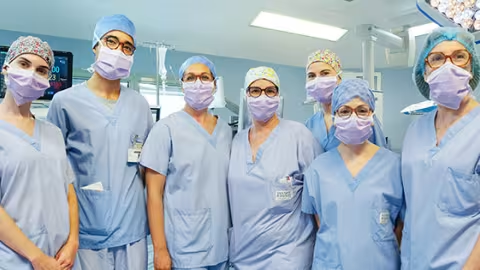
On 28 May, teams from the Department of Anaesthesia, Surgery and Interventional Procedures performed the 60th endoscopic mastectomy at Gustave Roussy. This technique, carried out under continuous visual guidance using a camera, enables the removal of the breast through a very short incision, thereby improving the aesthetic outcomes of breast reconstruction. This approach enhances Gustave Roussy’s surgical offering, alongside robotic surgery, and helps widen access to less invasive techniques for a greater number of patients.
-
Les derniers progrès présentés au Congrès de San Antonio (Texas), entièrement dédié aux cancers du sein
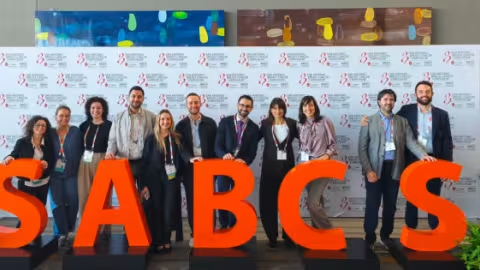
Le San Antonio Breast Cancer Symposium réunit chaque année les meilleurs experts mondiaux du cancer du sein pour échanger sur les dernières avancées dans la prise en charge de cette pathologie. Pour cette édition 2025, les médecins chercheurs de Gustave Roussy ont pris part à 46 présentations.
-
Octobre rose : Donner à chaque femme le pouvoir de se reconstruire
Mois placé sous le signe de la prévention et de la sensibilisation aux cancers du sein, Octobre Rose est cette année l’occasion pour Gustave Roussy de mettre en lumière la reconstruction mammaire immédiate, qui permet de reconstruire le sein de la patiente en même temps que la mastectomie. La campagne « L’art de se reconstruire », qui sera déployée sur les réseaux sociaux de l'Institut, évoquera également la prise en charge globale proposée à Gustave Roussy, de la prévention personnalisée à l’après-cancer. Parallèlement, la campagne de philanthropie 50 nuances de rose va permettre de récolter des dons pour développer un programme d’intelligence artificielle appliqué au cancer du sein.



Frequently Asked Questions
When detected at an early stage, breast cancer has a favorable prognosis: the five-year net survival rate is 88% for women diagnosed between 2010 and 2015, and reaches approximately 99% for cases detected very early. This is one of the reasons why screening is essential.
In France, approximately 61,000 new cases are diagnosed each year (an estimated 61,214 cases in 2023). It is the most common cancer among women.
In most cases, no. About 5% of breast cancers are hereditary, primarily due to a mutation in the BRCA1 or BRCA2 genes. A genetic counseling consultation may be recommended if there is a suggestive family history.
Surgery is the standard treatment for localized breast cancer, and it is rare that it is not recommended. It is increasingly breast-conserving, and reconstruction is offered whenever possible.
Yes. A second opinion can help confirm a diagnosis, discuss a treatment strategy, or evaluate eligibility for a clinical trial. Requests must be made in accordance with the procedures specified by the breast pathology committee.