
Welcome to the new Gustave Roussy website
A new website designed to offer you a simpler, clearer, and more intuitive experience. Patients, caregivers, healthcare professionals, and donors: find information, news, and services more easily.
Immunotherapy
Immunotherapy is a treatment that helps the immune system recognize and fight cancer cells. It has led to significant advances in the management of many cancers and can be used alone or in combination with other treatments.
What is immunotherapy?
Immunotherapy works differently from chemotherapy or radiation therapy. Its goal is to stimulate or reactivate the body’s natural defenses so that they can identify and destroy cancer cells.
Key Points
- Immunotherapy does not automatically replace other treatments.
- It can be used alone or in combination with other treatment approaches.
- Not all patients are eligible for this treatment.
The Immune System
The immune system consists of the cells and defense mechanisms that naturally protect the body against infections and certain abnormal cells.
In what cases is immunotherapy recommended?
Immunotherapy can be used for different types of cancer and at different stages of the treatment journey.
The choice of treatment depends, in particular, on:
- the type of cancer;
- the biological characteristics of the tumor;
- the patient’s overall health;
- the treatments the patient has already received.
How does the treatment work?
Depending on the medication used, immunotherapy can be administered as an infusion or through more specific approaches.
Key steps:
- Consultation with the medical team
- Assessment of the treatment indication
- Administration of treatment according to the established protocol
- Regular monitoring of efficacy and tolerability
- Follow-up throughout the course of care
Close monitoring throughout the course of treatment
The teams at Gustave Roussy regularly monitor patients to quickly detect any side effects and adjust their care as needed.
The various approaches developed at Gustave Roussy
-
CAR-T cells
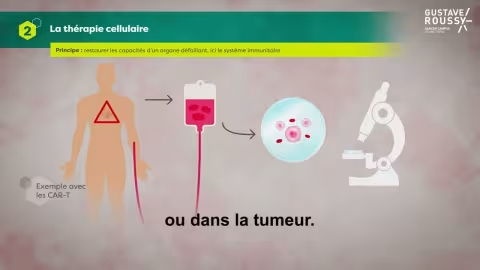
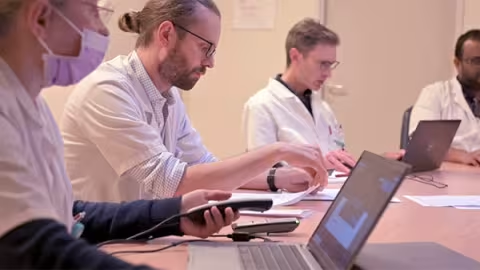
CAR-T cells are an innovative form of cellular immunotherapy. This approach involves harvesting certain immune cells from the patient, modifying them in the laboratory so that they can better recognize cancer cells, and then re-injecting them into the patient to help fight the disease. It is currently used in certain situations, particularly to treat blood cancers.
-
Intratumoral immunotherapy
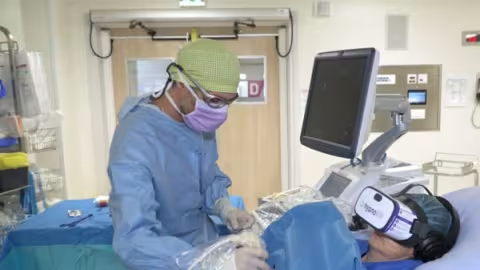
The principle behind intratumoral immunotherapy is to use the tumor itself as a vaccine by injecting treatments into it that can stimulate an immune response against cancer cells.
-
REISAMIC: Expertise Focused on the Side Effects of Immunotherapy
Immunotherapies have revolutionized the treatment of many cancers. Like any treatment, they can cause specific adverse effects. To better identify and manage these effects, Gustave Roussy has developed REISAMIC (Registry of Severe Adverse Effects of Immunomodulatory Monoclonal Antibodies in Oncology), a reference system dedicated to monitoring and managing immunotherapy-related toxicities.


What are the side effects?
Like any treatment, immunotherapy can cause side effects. By stimulating the immune system, it can sometimes lead to inflammatory reactions affecting various organs. Most of these effects are reversible when detected and treated promptly. Any new symptoms should be reported to the healthcare team.

Key Takeaways
Don't wait until your next appointment to report an unusual symptom. Early treatment usually helps control side effects quickly.
What are the most common side effects?
Immunotherapy can cause various side effects that vary from person to person:
- fatigue;
- skin rash, itching;
- diarrhea or digestive problems;
- joint or muscle pain;
- hormonal disorders related to inflammation of certain glands;
- more rare damage to the lungs, liver, kidneys, or other organs.
When should you contact your healthcare team?
When should you contact your healthcare team?
You should notify your medical team immediately if you experience:
- persistent diarrhea;
- shortness of breath or an unusual cough;
- fever;
- severe or sudden fatigue;
- unusual pain;
- the onset of any new symptoms during treatment.
How are side effects managed?
Gustave Roussy has developed specific expertise in monitoring toxicity related to immunotherapy. Patients receive coordinated care involving, if necessary, various specialists depending on the affected organ. This approach is supported in particular by the REISAMIC system, which is dedicated to managing the adverse effects of immunotherapies.
Should treatment be stopped if a side effect occurs?
Not necessarily. Depending on their nature and severity, adverse effects may be monitored, treated, or lead to a temporary adjustment of the treatment. The appropriate course of action is always determined in consultation with the medical team.