
Welcome to the new Gustave Roussy website
A new website designed to offer you a simpler, clearer, and more intuitive experience. Patients, caregivers, healthcare professionals, and donors: find information, news, and services more easily.
Intratumoral immunotherapy
The principle behind intratumoral immunotherapy is to use the tumor itself as a vaccine by injecting treatments into it that can stimulate an immune response against cancer cells.
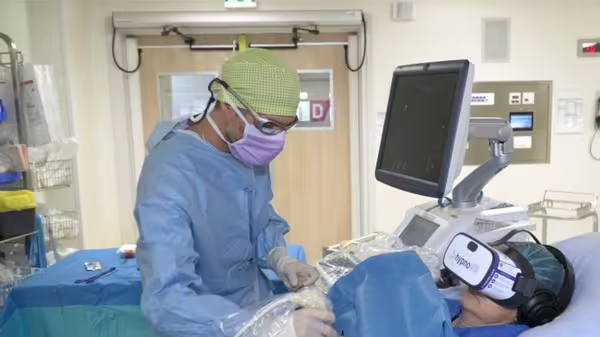
How does intratumoral immunotherapy work?
Intratumoral immunotherapy involves the direct injection of treatments into a tumor, guided by ultrasound or CT scan.
The injected agents can be of various types: antibodies targeting immune checkpoints (anti-PD-1, anti-PD-L1, anti-CTLA-4), bispecific antibodies, oncolytic viruses or peptides, therapeutic RNA, or adoptive cell immunotherapies.
The goal is to locally stimulate the immune system to trigger a response capable of recognizing and attacking cancer cells, even beyond the injection site.
These approaches are still experimental and are only available as part of clinical trials. Access to them depends, in particular, on the type of cancer, the patient’s condition, the technical feasibility of the injection, and the eligibility criteria specific to each study.
Definition
Intratumoral injection
Administration of treatment directly into a tumor using a needle guided by the physician with the aid of medical imaging.
Understanding Intratumoral Immunotherapy
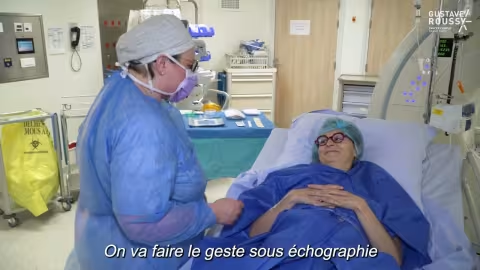
Greater effectiveness, fewer side effects
When administered intravenously, immunotherapies spread throughout the body and can cause adverse effects related to their mechanism of action.
Intratumoral immunotherapy takes a different approach: the doses administered are generally 10 to 100 times lower than those used intravenously, but are injected directly into the tumor at high concentrations.
This local administration maximizes the tumor cells’ exposure to the treatment while limiting exposure to the rest of the body and reducing the risk of side effects.
At Gustave Roussy, these injections are performed as part of clinical trials, upon the recommendation of an oncologist, in the interventional radiology suite after the lesion has been located via ultrasound or CT scan.
Why is this approach promising?
By acting directly at the center of the tumor, intratumoral immunotherapy stimulates the immune response as close as possible to the cancer cells. This strategy could improve the effectiveness of treatments while limiting their toxicity.
An Approach at the Heart of Research
Intratumoral immunotherapy is one of the most innovative strategies developed in immuno-oncology. Researchers are studying different ways to stimulate the immune system more effectively, strengthen the antitumor response, and improve patient outcomes.
Gustave Roussy’s Expertise
Gustave Roussy plays a pioneering role in the development of intratumoral immunotherapy. This approach is one of the Institute’s major areas of research, aimed at improving the efficacy of immunotherapies and better mobilizing the immune system against cancer cells.
Biotheris: An Expert Research Unit Within Gustave Roussy
Biotheris is an Inserm-accredited Clinical Investigation Center (CIC) dedicated to clinical and translational research in intratumoral immunotherapy.
Its mission is to facilitate the development of clinical trials evaluating these innovative treatments, from Phase I through Phase IV, and to accelerate the transfer of research advances to patients.
Serving as a bridge between clinical care and research teams, Biotheris centralizes the management of intratumoral injections performed at Gustave Roussy. The facility has a dedicated space and a specialized team, ensuring unique expertise in this field.