Welcome to the new Gustave Roussy website
A new website designed to offer you a simpler, clearer, and more intuitive experience. Patients, caregivers, healthcare professionals, and donors: find information, news, and services more easily.
Make a donation to support research on adrenal and thyroid cancers and neuroendocrine tumors
In the localized stage, the challenge in treating these cancers is to avoid overdiagnosis and overtreatment in order to minimize the risk of long-term complications.
In the advanced or metastatic stage, the goal is to better understand the biology of these cancers and develop new treatment strategies. In both situations, research is essential!
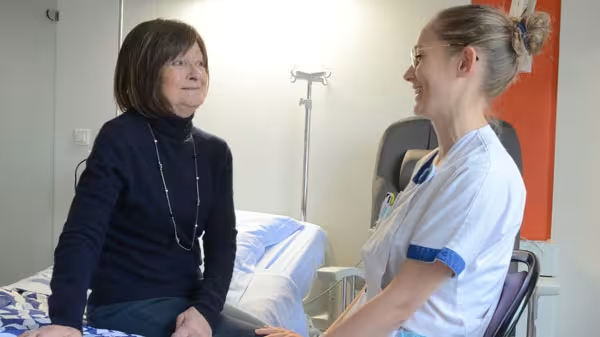
Through your donations, you can play an active role in innovation and accelerate research that directly benefits patients!
Innovating for Better Care: Three Flagship Research Programs:
Molecular diagnosis of thyroid cancers to limit unnecessary treatments and improve existing treatments.
Molecular diagnostics offer the hope of avoiding overdiagnosis of thyroid cancer during nodule biopsies, thereby limiting surgery to patients who truly need it.
Molecular diagnostics also make it possible to identify the BRAF gene mutation responsible for resistance to radioactive iodine, the primary treatment for thyroid cancers. Identifying this mutation and inhibiting it with medications restores the effectiveness of iodine.
Identify new therapeutic targets and develop clinical trials for pheochromocytomas, paragangliomas, and adrenocortical tumors.
Pheochromocytomas are characterized by a genetic predisposition and numerous molecular alterations. A better understanding of these mutations holds the promise of developing new, more targeted, and effective treatments.
Adrenocortical tumors are aggressive tumors treated with chemotherapy and mitotane. Immunotherapy has shown encouraging results, and much research remains to be done to make this innovation available to all patients.
Targeted therapies and immunotherapy for endocrine tumors are therefore the focus of research at Gustave Roussy.
Identifying the best treatment sequence with minimal toxicity
Neuroendocrine tumors generally grow slowly. Patients with these tumors will therefore receive several different treatments over the course of their disease. Identifying the treatments with the lowest risk of complications is essential. Consequently, research at Gustave Roussy is focusing on the risk of toxicity to blood cells associated with vectorized internal radiation therapy (the injection of a radioactive substance for treatment).