Welcome to the new Gustave Roussy website
A new website designed to offer you a simpler, clearer, and more intuitive experience. Patients, caregivers, healthcare professionals, and donors: find information, news, and services more easily.
Gustave Roussy at the ASCO 2026 Annual Meeting
The American Society of Clinical Oncology (ASCO) Annual Meeting is one of the leading global events in cancer research, held each year in Chicago, United States. Experts from Gustave Roussy contributed to 107 presentations featured in the 2026 programme, with a particular focus on antibody–drug conjugates (ADCs), a rapidly expanding field across new indications. At Gustave Roussy, this clinical development is supported by international translational research programmes such as OASIS and Icarus.
Published on
Changed on
The American Society of Clinical Oncology (ASCO) Annual Meeting is one of the leading global events in cancer research, held each year in Chicago, United States. Experts from Gustave Roussy contributed to 107 presentations featured in the 2026 programme, with a particular focus on antibody–drug conjugates (ADCs), a rapidly expanding field across new indications. At Gustave Roussy, this clinical development is supported by international translational research programmes such as OASIS and Icarus.
Focused on the clinical development of the latest advances in oncology, the ASCO Annual Meeting brings together thousands of cancer specialists from around the world to exchange on cutting-edge developments in patient care. This year in Chicago, Gustave Roussy experts contributed to a total of 107 presentations, including:
- 1 study selected for the Plenary Session, the most prestigious session of the meeting. Professor Benjamin Besse is a co-author of the LIBRETTO study in lung cancer.
- 11 oral presentations, including two delivered by a Gustave Roussy expert.
- 1 case-based panel.
- 3 clinical science symposia.
- 12 rapid oral abstract sessions.
- 77 poster presentations.
- 2 educational sessions.
Gustave Roussy’s expertise in antibody–drug conjugates and novel therapeutic avenues
Several studies will be presented directly by physician-scientists from Gustave Roussy, including two oral presentations focused on antibody–drug conjugates, a new class of therapies showing promising clinical results by combining the efficacy of chemotherapy with the targeting precision of antibodies. By binding to a protein specifically expressed on the surface of cancer cells, these treatments deliver chemotherapy directly into the tumour while sparing healthy tissues.
Professor Yohann Loriot – A promising new antibody–drug conjugate for patients with advanced cervical cancer
Professor Yohann Loriot, Deputy Head of the Department of Drug Development and Early Phase Trials (DITEP) at Gustave Roussy, will present in an oral session the results of a phase I/II study evaluating a new treatment for women with relapsed or metastatic cervical cancer, a setting with currently limited therapeutic options. This investigational therapy, CRB-701, is an antibody–drug conjugate targeting nectin-4. It has already demonstrated encouraging activity in certain head and neck and bladder cancers
Professor Antoine Italiano – Personalising ADC therapies through a novel tumour mapping approach
To improve the efficacy of antibody–drug conjugates and better understand resistance mechanisms in certain patients, Professor Antoine Italiano, medical oncologist and Head of the Precision Medicine Programme at Gustave Roussy, led an innovative study mapping tumours from patients with lung, bladder, gastric and endometrial cancers. Using immunohistochemistry techniques, researchers identified which proteins were expressed in each tumour, in what quantity, and with what spatial distribution. The goal is to select the most appropriate ADC for each patient based on the biological characteristics of their tumour.
Professor Fabrice André – An antibody–drug conjugate as first-line treatment in metastatic breast cancer
Professor Fabrice André, Director of Research at Gustave Roussy, is the senior author of a study reporting the final results of the phase I/II DESTINY-Breast07 trial, presented at a clinical science symposium. This study evaluated the antibody–drug conjugate trastuzumab deruxtecan (T-DXd) as first-line therapy in combination with durvalumab, an anti–PD-L1 immunotherapy, in patients with inoperable or metastatic HER2-positive breast cancer.
T-DXd targets the HER2 protein, expressed on the surface of cancer cells in so-called HER2-positive breast cancers, which account for approximately 20% of all breast cancers. T-DXd has already demonstrated positive outcomes as a second-line treatment. Evaluating this combination in a first-line setting could redefine the standard of care and improve survival outcomes from the outset of treatment.
Focus on the European OASIS programme
The OASIS project (Optimal methods to characterise ADC resistance in Solid tumours and Identify clinically useful biomarkerS) is a European research programme dedicated to optimising ADC therapies. These innovative treatments precisely target cancer cells, thereby reducing damage to healthy tissues. Coordinated by Gustave Roussy and led by Dr Barbara Pistilli, the project aims to develop tools enabling clinicians to select the most appropriate ADC for each patient, considering both clinical characteristics and tumour biology.
Professor Sophie Postel-Vinay – Exploiting tumour genetic vulnerabilities to improve targeting
Professor Sophie Postel-Vinay, medical oncologist and physician-scientist within Gustave Roussy’s DITEP, will present the latest advances on an innovative strategy: exploiting tumour genetic vulnerabilities to improve targeting. Around 15% of all cancers, including lung, brain, pancreatic tumours, mesotheliomas, and certain lymphomas, exhibit loss of the MTAP gene. This alteration creates a metabolic imbalance in tumour cells, making them dependent on another enzyme, PRMT5, for survival. This dependency is precisely what new treatments aim to exploit: by inhibiting PRMT5, tumour cells can be weakened while sparing healthy tissues.
A new generation of drugs, more targeted and better tolerated than earlier compounds, is currently being investigated in more than 65 clinical trials worldwide. Professor Postel-Vinay will present available results and explore combination strategies with other anticancer therapies. Long confined to PARP inhibitors, this synthetic lethality approach is now expanding to new targets, offering promising prospects for patients with often limited treatment options.
Early-phase trials: what are they?
Early-phase trials are essential in oncology. Without them, no new treatment could reach the market. They represent the first stages in the life of a drug once it leaves the laboratory. These phase I or I/II trials aim to administer new anticancer therapies in humans for the first time, to assess initial signs of anti-tumour activity, evaluate safety and toxicity profiles, and determine the appropriate dose, schedule, and duration of treatment.
Gustave Roussy is the leading European centre for early-phase clinical trials, through its Department of Drug Development and Early Phase Trials (DITEP).
Of the 516 therapeutic trials conducted at the Institute in 2025, one-third were early-phase studies.
Advancing therapeutic vaccination
In parallel, Gustave Roussy experts will present five studies in rapid oral sessions, including two focused on therapeutic vaccines:
- Dr Caroline Even will present results from a phase I/II trial evaluating, following initial treatment, the administration of a therapeutic vaccine, CD40.HVac. This vaccine aims to stimulate patients’ dendritic cells to induce a targeted immune response against the tumour in patients with HPV16-positive oropharyngeal cancers.
- Professor Alexandra Leary will present results from the phase II TEDOVA trial, evaluating the therapeutic vaccine OSE2101, designed to train the immune system to recognise and destroy ovarian cancer cells. The vaccine is administered alone or in combination with immunotherapy in patients in remission following chemotherapy.
Last news
-
Breast Cancer: Gustave Roussy Ranked No. 1 in France for Breast Surgery and Breast Reconstruction
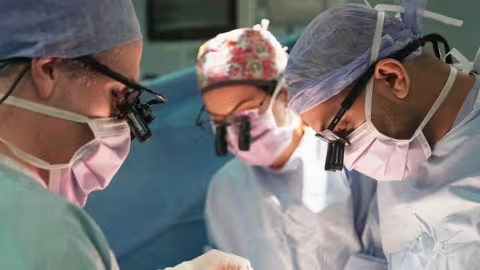
On the occasion of Breast Cancer Awareness Month, the 2025 data from Visuchir, the national surgical activity monitoring tool of the French Health Insurance system, places Gustave Roussy in first position for both breast surgery and breast reconstruction. Beyond this ranking, these figures highlight that reconstruction is now an integral part of breast cancer treatment. It is considered at every stage of care: from tumor removal surgery, whether lumpectomy or mastectomy, through to the post-cancer period, helping to restore the body and support women in regaining their physical integrity and quality of life.
-
Newsweek Ranking: Gustave Roussy Named Europe’s Leading Cancer Centre and Third Best Worldwide
The 2027 edition of Newsweek’s World's Best Specialized Hospitals ranking once again recognises Gustave Roussy as the leading cancer centre in France and Europe, and the third best worldwide. This distinction highlights the excellence of the Institute’s care and research, as well as the daily commitment of all its professionals.

-
Living with and beyond cancer: the promises and challenges of digital health
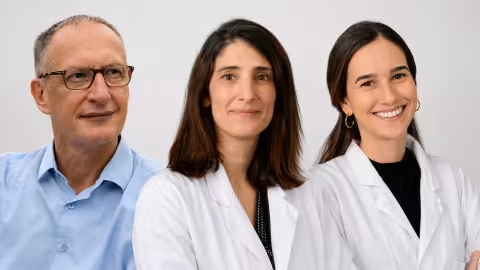
In a Viewpoint article published in The Lancet Digital Health, Drs Ines Vaz-Luis and Maria Alice Franzoi, together with Emmanuel Mussault, a patient partner at the PRISM University Hospital Institute, examine the role that digital tools can play in supporting people living with and beyond cancer. Their central message is that these technologies can support more personalised and accessible care, but their value depends primarily on how they are integrated into care pathways, the human support provided, their ability to address individual needs and their evaluation in real-world settings.
-
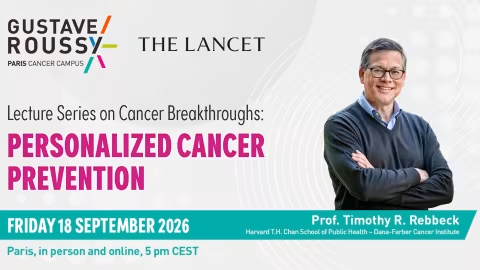
Gustave Roussy and The Lancet launch an international lecture series on innovations transforming cancer care
The inaugural lecture in the “Lecture Series on Cancer Breakthroughs” will take place on Friday 18 September at 5:00 pm. It will be delivered by Professor Timothy R. Rebbeck, a leading cancer prevention specialist at Harvard University and the Dana-Farber Cancer Institute.