Welcome to the new Gustave Roussy website
A new website designed to offer you a simpler, clearer, and more intuitive experience. Patients, caregivers, healthcare professionals, and donors: find information, news, and services more easily.
Predicting the response to immunotherapy with artificial intelligence
A study published in The Lancet Oncology establishes for the first time that artificial intelligence can process medical images to extract biological and clinical information. By designing an algorithm and developing it to analyse CT scan images, medical researchers at Gustave Roussy, CentraleSupélec, Inserm, Paris-Sud University and TheraPanacea have created a so-called radiomic signature.
Published on
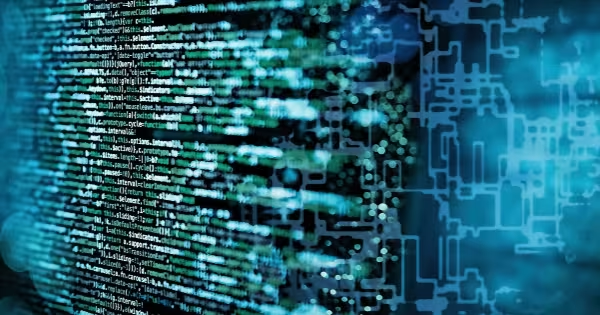
A study published in The Lancet Oncology establishes for the first time that artificial intelligence can process medical images to extract biological and clinical information. By designing an algorithm and developing it to analyse CT scan images, medical researchers at Gustave Roussy, CentraleSupélec, Inserm, Paris-Sud University and TheraPanacea (spin-off from CentraleSupélec specialising in artificial intelligence in oncology-radiotherapy and precision medicine) have created a so-called radiomic signature. This signature defines the level of lymphocyte infiltration of a tumour and provides a predictive score for the efficacy of immunotherapy in the patient. In the future, physicians might thus be able to use imaging to identify biological phenomena in a tumour located in any part of the body without having to perform a biopsy.
Up to now, no marker can accurately identify those patients who will respond to anti-PD-1/PD-L1 immunotherapy in a situation where only 15 to 30% of patients do respond to such treatment. It is known that the richer the tumour environment is immunologically (presence of lymphocytes) the greater the chance that immunotherapy will be effective, so the researchers have tried to characterise this environment using imaging and correlate this with the patients’ clinical response. Such is the objective of the radiomic signature designed and validated in the study published in The Lancet Oncology.
In this retrospective study, the radiomic signature was captured, developed and validated in 500 patients with solid tumours (all sites) from four independent cohorts. It was validated genomically, histologically and clinically, making it particularly robust.
Using an approach based on machine learning, the team first taught the algorithm to use relevant information extracted from CT scans of patients participating in the MOSCATO* study , which also held tumor genome data. Thus, based solely on images, the algorithm learned to predict what the genome might have revealed about the tumour immune infiltrate, in particular with respect to the presence of cytotoxic T-lymphocytes (CD8) in the tumour, and it established a radiomic signature.
This signature was tested and validated in other cohorts including that of TCGA (The Cancer Genome Atlas) thus showing that imaging could predict a biological phenomenon, providing an estimation of the degree of immune infiltration of a tumour.
Then, to test the applicability of this signature in a real situation and correlate it to the efficacy of immunotherapy, it was evaluated using CT scans performed before the start of treatment in patients participating in 5 phase I trials of anti-PD-1/PD-L1 immunotherapy. It was found that the patients in whom immunotherapy was effective at 3 and 6 months had higher radiomic scores as did those with better overall survival.
The next clinical study will assess the signature both retrospectively and prospectively, will use larger numbers of patients and will stratify them according to cancer type in order to refine the signature.
This will also employ more sophisticated automatic learning and artificial intelligence algorithms to predict patient response to immunotherapy. To that end, the researchers are intending to integrate data from imaging, molecular biology and tissue analysis. This is the objective of the collaboration between Gustave Roussy, Inserm, Université Paris-Sud, CentraleSupélec and TheraPanacea to identify those patients who are the most likely to respond to treatment, thus improving the efficacy/cost ratio of the treatment.
* Results of the MOSCATO study published in Cancer Discovery : http://cancerdiscovery.aacrjournals.org/content/early/2017/03/26/2159-8290.CD-16-1396
About radiomics
In radiomics, it is considered that imaging (CT, MRI, ultrasound, etc.) not only reveals the organisation and architecture of tissues but also their molecular or cellular composition. The technique involves the use of algorithms to analyse a medical image objectively in order to extract from it information which is invisible to the naked eye, such as the texture of a tumour, its micro-environment, its heterogeneity, etc. For the patient this represents a non-invasive approach that can be repeated over the course of the disease to follow its progress.
The study
DOI : 10.1016/S1470-2045(18)30413-3
Radiomics to assess tumor infiltrating CD8 T-cells and response to anti-PD-1/PD-L1 immunotherapy in cancer patients: an imaging biomarker multi-cohort study
Roger Sun (MD, MSc)1,2,3*, Elaine Johanna Limkin (MD)1,2,3*, Maria Vakalopoulou (PhD)3,4,7 Laurent Dercle (MD, MSc)5, Stéphane Champiat (MD, PhD)6, Shan Rong Han (MD)7, Loïc 8 Verlingue (MD, MSc)6, David Brandao (MSc)8, Andrea Lancia (MD)1,3,9, Samy Ammari 9 (MD, MSc)10, Antoine Hollebecque (MD)6, Jean-Yves Scoazec (Prof, MD, PhD)11,12, 10 Aurélien Marabelle (MD, PhD)6, Christophe Massard (MD, PhD)6, Jean-Charles Soria (Prof, 11 MD, PhD)6,12, Charlotte Robert (PhD)1,3,12,13, Nikos Paragios (Prof, PhD) 3,4,14, Eric Deutsch 12 (Prof, MD, PhD)1,2,3,6,12†, Charles Ferté (MD, PhD) 1,3,6†
1 INSERM U1030, Radiomics team, Gustave Roussy Cancer Campus, 94800 Villejuif, France
2 Department of Radiation Oncology, Gustave Roussy Cancer Campus, 94800 Villejuif, 18 France
3 Gustave Roussy - CentraleSupelec - Therapanacea Center of Artificial Intelligence in Radiation Therapy & Oncology, Gustave Roussy Cancer Campus, 94800 Villejuif, France
4 Center for Visual Computing, CentraleSupelec, INRIA, Paris-Saclay University, 91190 Gif-sur-Yvette, France
5 Department of Nuclear Medicine and Endocrine Oncology, Gustave Roussy Cancer Campus, INSERM U1015, Paris Saclay university, 94800 Villejuif, France,
6 Drug development Department, Gustave Roussy Cancer Campus, 94800 Villejuif, France
7 Pathology department, Hôpital Nord Franche-Comté, 100 route de Moval – CS 10499 Trevenans, 90015 Belfort, France
8 INSERM U1170, Gustave Roussy Cancer Campus, 94800 Villejuif, France
9 Department of Diagnostic Imaging, Molecular Imaging, Interventional Radiology And Radiotherapy, Tor Vergata General Hospital, 00133 Rome, Italy
10 Department of Radiology, Gustave Roussy Cancer Campus, 94800 Villejuif, France
11 Department of Pathology, Gustave Roussy Cancer Campus, 94800 Villejuif, France
12 Paris-Sud University, Faculté de médecine du Kremlin-Bicêtre, 94270 Kremlin-Bicêtre, France
13 Department of Medical Physics, Gustave Roussy Cancer Campus, 94800 Villejuif, France
14 TheraPanacea, 75014, Paris, France
Last news
-
Breast Cancer: Gustave Roussy Ranked No. 1 in France for Breast Surgery and Breast Reconstruction
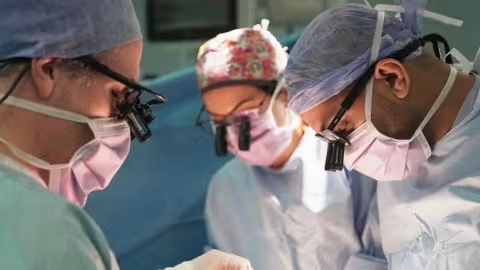
On the occasion of Breast Cancer Awareness Month, the 2025 data from Visuchir, the national surgical activity monitoring tool of the French Health Insurance system, places Gustave Roussy in first position for both breast surgery and breast reconstruction. Beyond this ranking, these figures highlight that reconstruction is now an integral part of breast cancer treatment. It is considered at every stage of care: from tumor removal surgery, whether lumpectomy or mastectomy, through to the post-cancer period, helping to restore the body and support women in regaining their physical integrity and quality of life.
-
Newsweek Ranking: Gustave Roussy Named Europe’s Leading Cancer Centre and Third Best Worldwide
The 2027 edition of Newsweek’s World's Best Specialized Hospitals ranking once again recognises Gustave Roussy as the leading cancer centre in France and Europe, and the third best worldwide. This distinction highlights the excellence of the Institute’s care and research, as well as the daily commitment of all its professionals.
-
Living with and beyond cancer: the promises and challenges of digital health
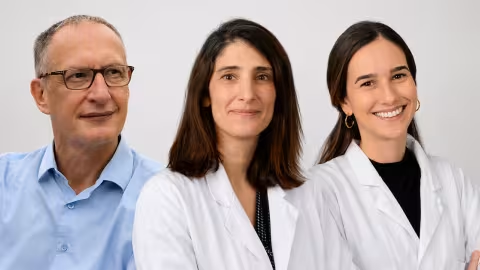
In a Viewpoint article published in The Lancet Digital Health, Drs Ines Vaz-Luis and Maria Alice Franzoi, together with Emmanuel Mussault, a patient partner at the PRISM University Hospital Institute, examine the role that digital tools can play in supporting people living with and beyond cancer. Their central message is that these technologies can support more personalised and accessible care, but their value depends primarily on how they are integrated into care pathways, the human support provided, their ability to address individual needs and their evaluation in real-world settings.
-
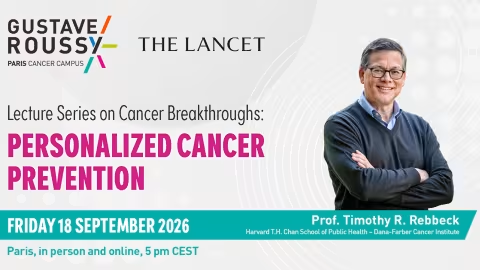
Gustave Roussy and The Lancet launch an international lecture series on innovations transforming cancer care
The inaugural lecture in the “Lecture Series on Cancer Breakthroughs” will take place on Friday 18 September at 5:00 pm. It will be delivered by Professor Timothy R. Rebbeck, a leading cancer prevention specialist at Harvard University and the Dana-Farber Cancer Institute.